Thanks for checking out Juniper Tours’ Travel blog! We hope you enjoyed your read and if you’re looking for more content please check out our other blog posts! If you’re looking for help planning your next travel adventure then book a FREE travel consultation with one of our Travel Specialists today!
The Best Cotswolds Villages to Visit (And How to See Them Without a Car)
By Juniper Tours | Cotswolds Travel Guide | Updated 2026

Quick Answer: Which Cotswolds Villages Are Best to Visit?
The best Cotswolds villages to visit are Bourton-on-the-Water, Bibury, Chipping Campden, Stow-on-the-Wold, Lower Slaughter, Broadway, Burford, and Snowshill. Each offers honey-coloured stone architecture, history stretching back centuries, and the quintessential English charm the Cotswolds is famous for. If you don’t have a car — or simply don’t want the stress of narrow country lanes and scarce parking — a guided Cotswolds tour is the smartest, most enjoyable way to experience all of them.
What Makes the Cotswolds So Special?
Stretching across nearly 800 square miles of central England and spanning five counties — Gloucestershire, Oxfordshire, Warwickshire, Wiltshire, and Worcestershire — the Cotswolds is a designated Area of Outstanding Natural Beauty (AONB). Its iconic landscape of rolling wolds, wildflower meadows, dry-stone walls, and picture-perfect villages hasn’t changed dramatically in hundreds of years.
The reason? Economic serendipity. When the region’s medieval wool trade collapsed, the Cotswolds was essentially frozen in time. Wealthy wool merchants’ grand manor houses slowly aged into graceful, honey-toned landmarks. Villages stopped being “developed” and instead became wonderfully preserved. What was once financial ruin is now the most photographed countryside in England.
The result for travellers: a region where you genuinely feel you’ve stepped into another era — one of thatched rooftops, cobbled market squares, cosy pubs serving real ales, and lanes lined with climbing roses and lavender.
The 8 Best Cotswolds Villages to Visit
1. Bourton-on-the-Water — “The Venice of the Cotswolds”
Best for: First-time visitors, families, scenic walks
If you visit only one Cotswolds village, make it Bourton-on-the-Water. The River Windrush flows right through the heart of the village, crossed by a series of elegant low stone bridges that have earned it the nickname “The Venice of the Cotswolds.” On a sunny day, locals and visitors alike gather on the green riverbanks — it’s one of the most idyllic scenes in all of England.
Don’t miss the Model Village — a remarkable one-ninth scale replica of Bourton itself, built in the 1930s — the Cotswold Motoring Museum housed in a converted watermill, and the River Windrush’s annual football match played in the water each August.
Insider tip from Juniper Tours: Bourton-on-the-Water can get extremely busy in summer afternoons. Our guided tours visit early in the day — when the light is golden and the bridges are clear — before the crowds arrive.
2. Bibury — England’s Most Beautiful Village
Best for: Photography, history buffs, National Trust fans
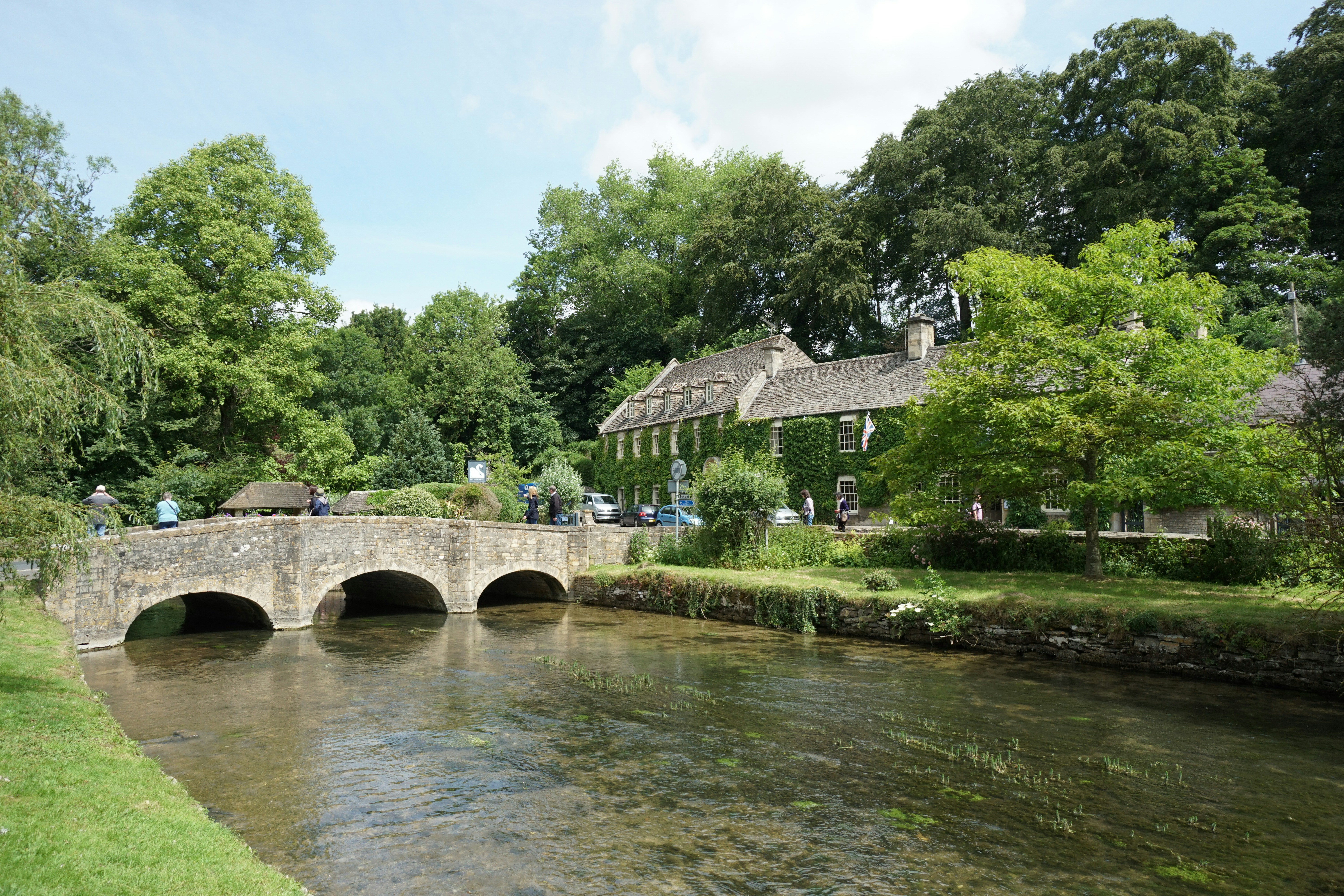
William Morris, the famous Victorian designer and writer, once called Bibury “the most beautiful village in England.” It’s hard to argue. The village meanders along the River Coln, its centrepiece being Arlington Row — a row of 17th-century weavers’ cottages that is one of the most photographed spots in the entire UK. The adjacent water meadow, known as Rack Isle, is managed by the National Trust and bursts with wildflowers and meadow fauna.
Arlington Row’s history dates back to the 1300s and it featured in the 2007 fantasy film Stardust, as well as countless period dramas.
Insider tip from Juniper Tours: Bibury is tiny and tour buses can overwhelm it. We time our visits to arrive before 10am or after 4pm — the village is transformed without the crowds.
3. Chipping Campden — The Cotswolds’ Finest High Street
Best for: Architecture lovers, history enthusiasts, walkers
Chipping Campden is a medieval market town that has barely changed since the 14th century, when wealthy wool merchants built its magnificent limestone buildings. The 17th-century Market Hall, standing open on arches at the centre of the High Street, is one of the most iconic structures in the entire Cotswolds.
Don’t miss the Church of St. James — a grand “wool church” funded by the wealth of the medieval wool trade — Hidcote Manor Garden (one of the finest Arts and Crafts gardens in Britain), and the start of the 102-mile Cotswold Way National Trail.
Insider tip from Juniper Tours: Chipping Campden is the ideal base for exploring the North Cotswolds. We often begin tours here and work our way south through the day.
4. Stow-on-the-Wold — Market Town Magic
Best for: Shopping, foodies, history
Stow-on-the-Wold sits at the highest point of the Cotswolds and has been a thriving market town since the 12th century. Its name translates roughly to “holy place on the hill.” Today it’s known for its broad market square, independent antique shops, and excellent restaurants — but its most famous sight is the extraordinary doorway of St. Edward’s Church.
The 13th-century church door is flanked by two ancient yew trees whose gnarled roots and branches wrap around the entrance like something from a fantasy novel. It is widely believed to have inspired J.R.R. Tolkien’s famous Doors of Durin — the west gate entrance to Moria in The Lord of the Rings. The Battle of Stow-on-the-Wold in 1646 was also the last major battle of the English Civil War.
5. Lower Slaughter — The Cotswolds at Its Most Peaceful
Best for: Quiet exploration, romantic getaways, walking between villages
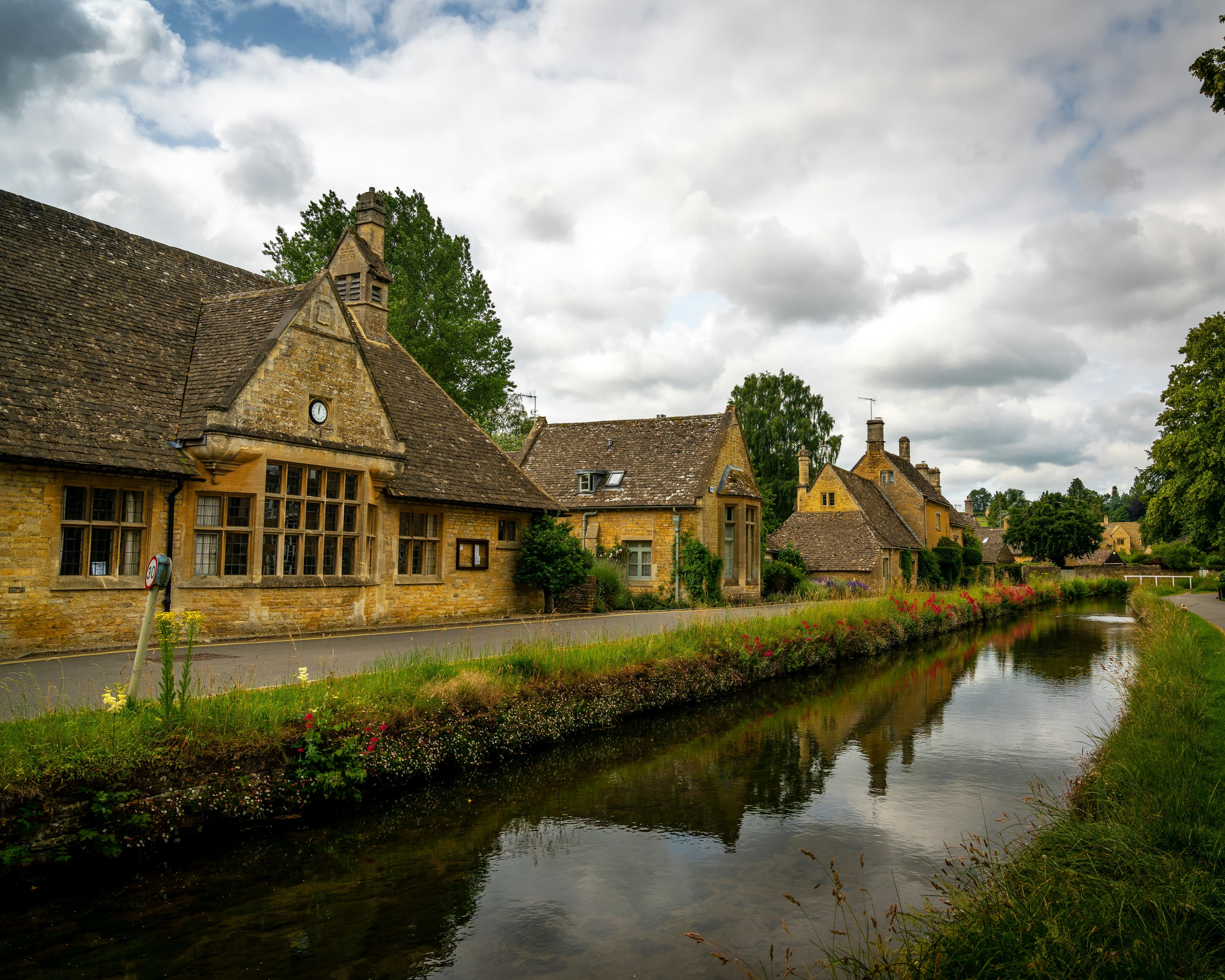
Despite its name (which derives from the Old English word for “wet, muddy ground”), Lower Slaughter is one of the most tranquil and romantic villages in the entire Cotswolds. The River Eye meanders gently through the village past a working 19th-century corn mill — one of the last in the region. Stone footbridges cross the water every few steps, and willow trees dip their branches into the current.
Lower Slaughter connects easily by footpath to both Upper Slaughter (just one mile away) and Bourton-on-the-Water (approximately two miles), making it perfect for light walking between villages.
Insider tip from Juniper Tours: The walk from Bourton-on-the-Water to Lower and Upper Slaughter is one of our favourite guided routes — flat, scenic, and deeply relaxing.
6. Broadway — The Showpiece of the North Cotswolds
Best for: Shopping, iconic views, afternoon tea
Broadway’s broad, sweeping High Street is lined with honey-gold manor houses, artisan cafés, galleries, and boutiques. Just outside the village stands Broadway Tower, the second-highest point in the Cotswolds. On a clear day, you can see across 16 counties — an unforgettable panorama.
Don’t miss Broadway Tower and its spectacular views, the Broadway Deli for a perfect picnic hamper, and the Gordon Russell Design Museum celebrating one of Britain’s finest furniture makers.
7. Burford — The Gateway to the Cotswolds
Best for: Day-trippers from London, historians, antique lovers
Often called “the Gateway to the Cotswolds,” Burford sits on the River Windrush and marks the eastern edge of the region. Its broad sloping High Street descends dramatically to a medieval bridge and is lined with 15th and 16th-century buildings, making it one of the best-preserved small towns in England.
Burford’s hidden history: in 1649, three soldiers known as the Levellers were executed in Burford churchyard for mutinying against Oliver Cromwell. The town still commemorates them each May during Levellers Day — a fascinating slice of English radical history most visitors never know about.
8. Snowshill — The Cotswolds’ Best-Kept Secret
Best for: Off-the-beaten-path exploration, National Trust fans
Snowshill is the hidden gem of the Cotswolds — a tiny hamlet of golden stone cottages perched in a fold of the hills, far from the main tourist routes. Snowshill Manor, managed by the National Trust, is one of the quirkiest historic properties in England. Its former owner, Charles Paget Wade, was an eccentric architect who spent his life collecting thousands of remarkable objects — from Samurai armour to musical instruments to model ships — filling every room floor-to-ceiling.
Snowshill also featured as the village in Bridget Jones’s Diary where Bridget’s parents live, shown covered in snow in the film’s opening scenes.
Can You Visit the Cotswolds Without a Car?
Yes — but it requires planning. The Cotswolds is famously difficult to navigate without your own vehicle. Public transport connects major towns like Cheltenham, Cirencester, and Moreton-in-Marsh, but the smaller, most beautiful villages — Bibury, Lower Slaughter, Snowshill, Chipping Campden — are largely inaccessible by bus.
Your options without a car: a rental car offers full flexibility but comes with narrow lanes, scarce parking, and unfamiliar left-hand driving. Local buses are budget-friendly but run very limited routes with long gaps between services. Taxis are door-to-door but expensive across multiple villages. A guided tour lets you see more, stress less, and benefit from expert local knowledge — making it the clear best option for most visitors.
Why a Guided Cotswolds Tour Makes All the Difference
Visiting the Cotswolds with Juniper Tours means you don’t just see the villages — you understand them. Our expert guides bring the history, stories, and hidden details to life: why the wool trade shaped every building in Chipping Campden, what the yew trees at St. Edward’s Church really mean, why Arlington Row’s cottages tell the story of England’s textile industry.
Our guided Cotswolds tours include transport from your hotel or central pickup point (no driving, no parking stress), access to smaller villages most independent travellers never reach, expert local guides with deep knowledge of Cotswolds history and culture, carefully timed itineraries that avoid the worst crowds at popular spots, and recommendations for lunch, tea, and local shopping at each stop.
Whether you’re visiting from London, staying in the Cotswolds, or looking to make the most of limited time in England, a Juniper Tours Cotswolds day trip is the most efficient and enjoyable way to experience the region’s very best.
Frequently Asked Questions About Visiting the Cotswolds
How many days do you need in the Cotswolds? Most travellers spend 2–3 days in the Cotswolds to see the highlights. With a guided tour, it’s possible to visit 5–6 of the best villages comfortably in a single day.
What is the best village to base yourself in the Cotswolds? Bourton-on-the-Water, Stow-on-the-Wold, and Chipping Campden are all excellent bases. For larger towns with more accommodation options, Cheltenham and Cirencester are ideal.
What is the most beautiful village in the Cotswolds? Bibury is often cited as the most beautiful, thanks to Arlington Row. Bourton-on-the-Water and Lower Slaughter are equally beloved. Every visitor tends to fall in love with a different village.
When is the best time to visit the Cotswolds? Spring (April–May) for blooming gardens and lambs; early autumn (September–October) for golden foliage and fewer crowds; summer for warm days and lavender in bloom at Snowshill. Winter is quiet and magical, with festive Christmas markets in many villages.
Is the Cotswolds worth visiting? Absolutely. The Cotswolds is consistently ranked among the most beautiful regions in the UK and Europe. Its unique combination of medieval architecture, rolling countryside, and remarkably well-preserved villages makes it genuinely unlike anywhere else in the world.
Can you do the Cotswolds as a day trip from London? Yes. The Cotswolds is approximately 1.5–2 hours from London by car or train to Moreton-in-Marsh. Many visitors make it a day trip, though staying overnight allows you to experience the villages in the magical early morning and evening light.
Plan Your Cotswolds Tour with Juniper Tours
Ready to experience the best of the Cotswolds without the hassle of driving, parking, or planning? Juniper Tours offers small-group and private guided Cotswolds tours departing from London and the surrounding region.
Our tours visit the villages that matter most — timed perfectly to avoid the crowds, enriched by expert local knowledge, and designed to be the most memorable day of your English adventure.
Book Your Free Travel Consultation with Juniper Tours →
Small groups. Expert guides. Unforgettable Cotswolds villages.