Edinburgh · Highlands · Isle of Skye · Belfast · Dublin
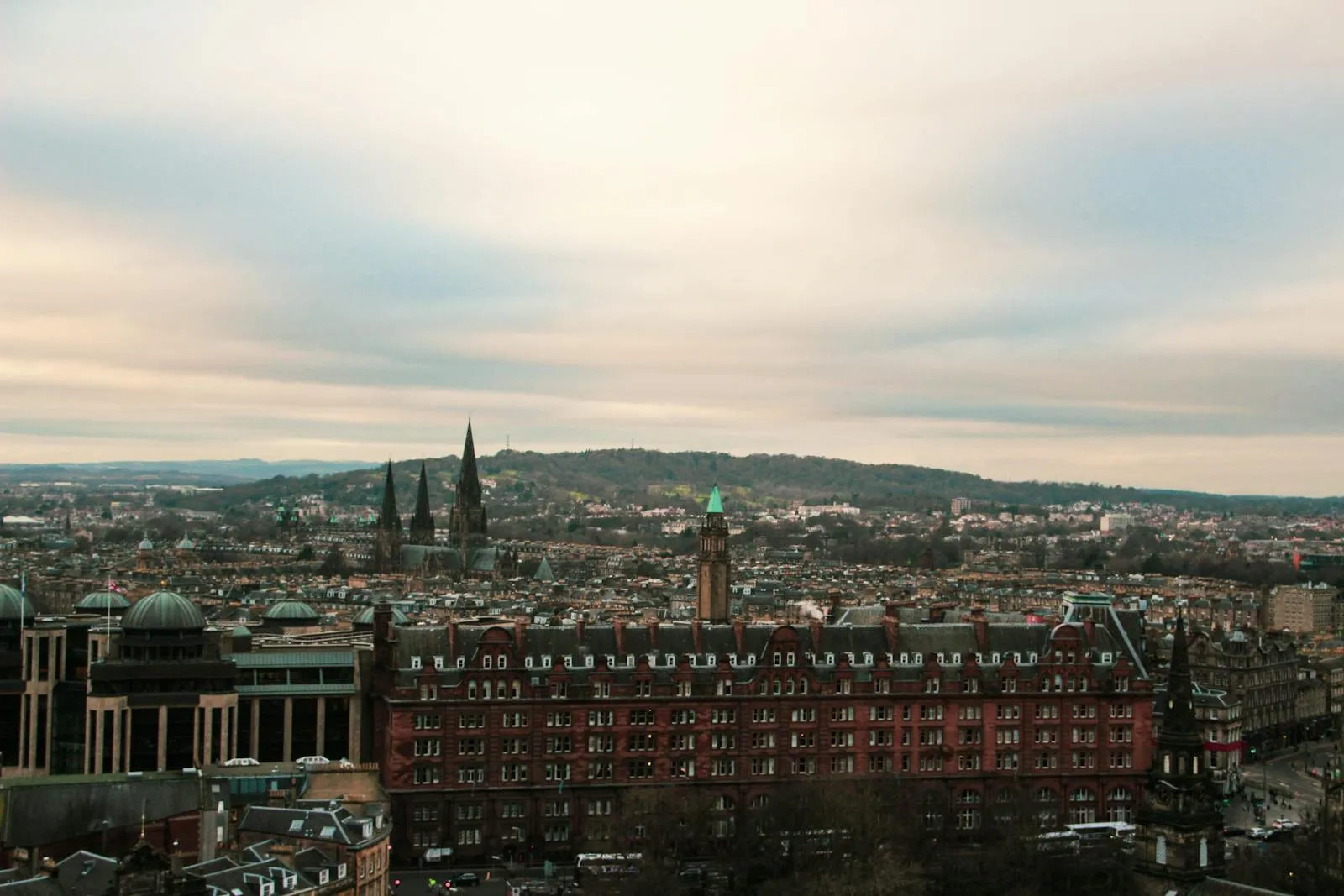
Welcome to Scotland. Your private driver meets you at Edinburgh Airport and transfers you into the capital — a compact, walkable city built on seven hills, where medieval closes open into elegant Georgian squares. Check in, unwind from the flight, and settle into the first evening of a two-week trip that spans two countries.
Edinburgh is the right first stop: it eases you into Celtic travel the way few other cities can. Your specialist has a dinner reservation ready. Tomorrow is the proper first full day.
A full day in the capital. Edinburgh Castle is the anchor — perched on an extinct volcanic plug at the top of the Royal Mile, it houses the Honours of Scotland and the Stone of Destiny. Your specialist has pre-booked the timed entry so you walk in rather than queuing. From the castle, the Royal Mile drops a mile eastward to the Palace of Holyroodhouse.
A private walking guide fills in the centuries in between — the plague-closed lanes, the witch trials, the Enlightenment coffee houses where Hume and Smith argued. Afternoon at leisure: Holyroodhouse, the Scotch Whisky Experience below the castle, or a climb up Calton Hill for the best late-afternoon view of the city.
A proper Highland transfer day. Your private driver collects you after breakfast and the A9 runs north through Perthshire — the gateway to the Highlands — climbing into landscape that grows steadily more dramatic. Pitlochry is the scheduled stop: a Victorian spa town with two small but serious distilleries (Blair Athol and Edradour) and a salmon ladder at the working hydroelectric dam.
Back on the road, you cross the Drumochter Pass and drop into the Cairngorms, then descend into the Great Glen and Inverness — the capital of the Highlands. Check in for two nights, walk the River Ness, and settle in.
The Highland heartland. Your driver takes you south along Loch Ness — Britain's largest body of freshwater by volume — to Urquhart Castle, a commanding 13th-century ruin on a promontory above the loch. A cruise from the Urquhart pier (pre-booked) gives you the view from the water, monster-spotting included.
Afternoon: Culloden Battlefield five miles east of Inverness — the 1746 battle that ended the Jacobite rising and changed Highland culture permanently. The visitor center is genuinely exceptional. For Outlander fans, Clava Cairns is next door to Culloden and is the Bronze Age stone circle the show drew on. Evening back in Inverness, at leisure.
One of Scotland's most visually spectacular drives. Your driver leaves Inverness west along the Great Glen, then cuts toward the west coast. Eilean Donan Castle appears near Kyle of Lochalsh: the small stone castle on a tidal island at the meeting of three sea lochs that has become one of the most photographed buildings in Scotland. Your specialist has pre-booked the interior tour.
The Skye Bridge carries you onto the Isle of Skye itself — the largest of the Inner Hebrides. First impressions form on the drive north to Portree, the island's main village, where you check in for two nights. Dinner with a view of the harbor is the right end to the day.
The island earns the trip. The three signature landscapes are all within a day's drive of Portree: the Fairy Pools near Glenbrittle (luminous blue rock pools below the Cuillin ridge), the Old Man of Storr (a 164-foot basalt pinnacle), and the Quiraing (a landslip of cliffs and pinnacles that looks like another planet).
Dunvegan Castle — seat of Clan MacLeod for 800 years and the oldest continuously inhabited castle in Scotland — is the obvious afternoon stop for an hour of clan history and the walled gardens. Your specialist builds the sequence around the light and the weather on the day. Final Scottish dinner in Portree; tomorrow you cross to Ireland.
The transit day. Your driver leaves Skye back across the bridge and turns south along the Road to the Isles, passing Fort William and through Glencoe — a narrow valley carved by ancient glaciers with a tragic clan history that's still tangible in the air. By early afternoon you arrive at Glasgow Airport for the short 45-minute flight to Belfast.
You land in Belfast mid-afternoon. A private driver collects you at Belfast International Airport and transfers you into the city. Check in and the evening is yours. Belfast is different from Edinburgh in almost every way — Victorian-industrial rather than medieval-royal, younger, scrappier, genuinely reinvented over the last twenty years. Welcome to Ireland.
The centerpiece of the Belfast stay is Titanic Belfast — built on the exact slipway where RMS Titanic was constructed, it's one of the finest maritime museums in the world. The architecture is extraordinary and the exhibition inside covers the full story of Belfast's shipbuilding history with genuine depth. Plan at least two hours.
The Ulster Museum, set in the Botanic Gardens, covers 9,000 years of Irish and Northern Irish history in a beautifully curated space — from Neolithic artifacts through the medieval monasteries to the Troubles period. Your afternoon stays flexible; the Cathedral Quarter is excellent for dinner, with a concentration of Victorian pubs and contemporary restaurants that together map Belfast's cultural evolution.
A proper Northern Ireland day. Your private driver runs you north along the Causeway Coastal Route — one of the great drives of the British Isles, with cliffs, castles, and hidden beaches on one side and the Glens of Antrim on the other. The Giant's Causeway is the main event: 40,000 interlocking hexagonal basalt columns formed by an ancient volcanic eruption, and the subject of a good origin myth involving the giant Finn McCool.
Your specialist has arranged a pre-booked timed entry that avoids the midday crowds. Return to Belfast via the Dark Hedges (the Game of Thrones beech-tree avenue) or Dunluce Castle on a clifftop over the Atlantic, depending on your interests. Evening back in Belfast, final dinner in the city before tomorrow's transfer south.
A short private transfer south across the border into the Republic of Ireland — about two hours by road, no passport control, just a different country. The route runs through Drogheda and into Dublin along the M1. Dublin is a compact capital that reveals itself gradually: the Georgian squares, the quays along the River Liffey, the neighborhoods that have completely reinvented themselves over the last decade.
Check in, leave your bags, and spend the afternoon at your own pace getting a feel for the city before your three full days here.
The first full Dublin day. Trinity College's Old Library is the morning's centerpiece — the 18th-century Long Room and the Book of Kells, a 9th-century illuminated gospel book that is genuinely one of the most beautiful surviving objects from medieval Europe. Your specialist has pre-booked the timed entry to avoid the queue.
Afternoon: the Guinness Storehouse, which is a better experience than the tourist-obligation reputation suggests. The exhibition on the brewery's history is well done, and the Gravity Bar at the top has the best panoramic view of the city. Dinner somewhere excellent in the city center, then a proper pub somewhere in the Temple Bar area or ideally slightly off it, where traditional music starts without announcement.
A second Dublin day that widens the frame. Kilmainham Gaol is the morning's history stop — a former prison that held leaders of every Irish rebellion from 1798 through the 1916 Rising, the latter of which ended here with firing-squad executions that genuinely changed Irish history. The guided tour is included in admission and is unsparingly well-done.
Afternoon: Christchurch Cathedral (Dublin's oldest church, with a spectacular Norman crypt), followed by a River Liffey cruise that re-frames the city from the water — Dublin is essentially a river city and the quays make the most sense seen from the Liffey itself. Evening: a proper Dublin food tour through the markets and independent restaurants, or dinner somewhere special on a quieter street.
A day trip into County Wicklow — the Garden of Ireland — just south of Dublin. Powerscourt Estate is the morning's set-piece: 18th-century Palladian house with 47 acres of formal gardens that have been named among the world's finest, including the Japanese Garden, the Pepperpot Tower, and the highest waterfall in Ireland (a short drive from the main estate).
Afternoon continues to Glendalough, an early medieval monastic settlement founded by St. Kevin in the 6th century and set in a dramatic glacial valley with two lakes. The round tower, the ruined cathedral, and the cemetery are freely accessible; the visitor center puts it all in context. Return to Dublin by early evening for the closing dinner of the trip.
A final Irish breakfast, then your private driver collects you for the transfer to Dublin Airport. Two weeks, two countries, one continuous trip — most clients leave already planning the next Celtic journey. Your Juniper specialist remains reachable throughout departure day, and your in-app itinerary stays accessible for any last-minute questions. Safe travels home.
This is a sample luxury custom route — a starting point, not a fixed package. Many clients travel something very close to this, customized for their travel style, group, and dates. Book a free consultation and a specialist will build from here.
Your specialist pre-arranges the right luxury experiences based on your interests and travel style. These are the custom experience types available on this route — specific choices are made with you, not for you.
Activities are selected and pre-booked with your specialist based on your interests — not all activities are included in every trip version. Availability varies by season.
You work directly with a specialist who knows both countries deeply — not a call center or booking agent. Every consultation is with someone who has been there, crossed that border, and knows both sides of the Irish Sea inside out.

Juniper Tours' most tenured specialist with 25 years of experience designing Scotland and Ireland itineraries. CMSC certified and a former Peace Corps volunteer. Taryn knows which castle hotel has the best breakfast, which Speyside distillery runs the best private tour, and how to build a two-country Celtic trip that flows seamlessly.

Having lived across six countries, Audrey brings a genuinely international perspective to every itinerary. She specializes in Scotland's Highlands and Ireland's wild coasts — the remote, the dramatic, the deeply local — and designs multi-country Celtic trips with the same off-the-beaten-track instinct.
“We just got back from a tour in Ireland and Scotland put together by Taryn Harrison. From the moment we landed at Dublin to the time we left, we experienced a truly memorable vacation. She scheduled unbelievable accommodations, side tours, free time for exploration and amazing food experiences. Each of the 6 of us will have these memories forever.”
James L. · Scotland & Ireland Combined Tour · Verified Google Review
30 minutes, completely free. Walk away with a clear picture of what your two-country Celtic trip could look like — dates, route, 4 and 5-star accommodations across both countries, and all.